Duration
4 Years

The Bachelor of Science in Diagnostic Radiography prepares students for a professional career in medical imaging through a strong combination of academic knowledge, practical skills and clinical experience.
The Bachelor of Science in Diagnostic Radiography prepares students for professional practice in medical imaging through a balanced combination of scientific knowledge, practical training and clinical experience.
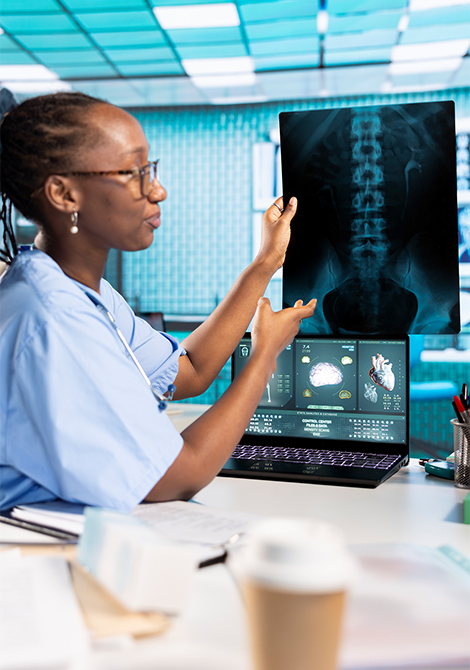
The programme develops competence in anatomy, radiographic positioning, imaging principles, radiation safety, patient care and professional practice, with a strong emphasis on applying theory in real clinical settings.
Students learn through classroom teaching, practical laboratory sessions and supervised clinical placements, helping them develop technical confidence, critical thinking, communication skills and a patient-centred approach to care. The programme also promotes professionalism, teamwork and safe practice in the use of medical imaging equipment.
The programme is suited to students interested in healthcare, science and technology who wish to pursue a career combining patient interaction with diagnostic imaging. Graduates are prepared to contribute effectively to multidisciplinary healthcare teams and continue developing within the radiography profession.
4 Years
Degree
Nursing
Science BB, Mathematics C, English Pass.
Graduates can contribute across healthcare services, administration, records, support and community-facing roles.
Work in hospitals, clinics and diagnostic imaging centres, performing radiographic examinations and producing images that support diagnosis and patient management.
Graduates may specialise in advanced imaging modalities such as Computed Tomography (CT) and Magnetic Resonance Imaging (MRI), working in specialised diagnostic imaging environments.
With further specialised training in medical ultrasound, graduates may progress into sonography and perform ultrasound examinations in areas such as obstetrics, gynaecology, abdominal imaging and other clinical specialties.
With postgraduate study and professional experience, graduates may pursue careers in teaching, research, clinical education, programme coordination and leadership within medical imaging.
Apply now or contact the admissions team for guidance.